Cataract Surgery
Advanced cataract surgery with personalized lens options to help restore clear, comfortable vision.
If cataracts are affecting your vision, our team can help you understand your options and determine the right time for treatment.
What Is a Cataract?
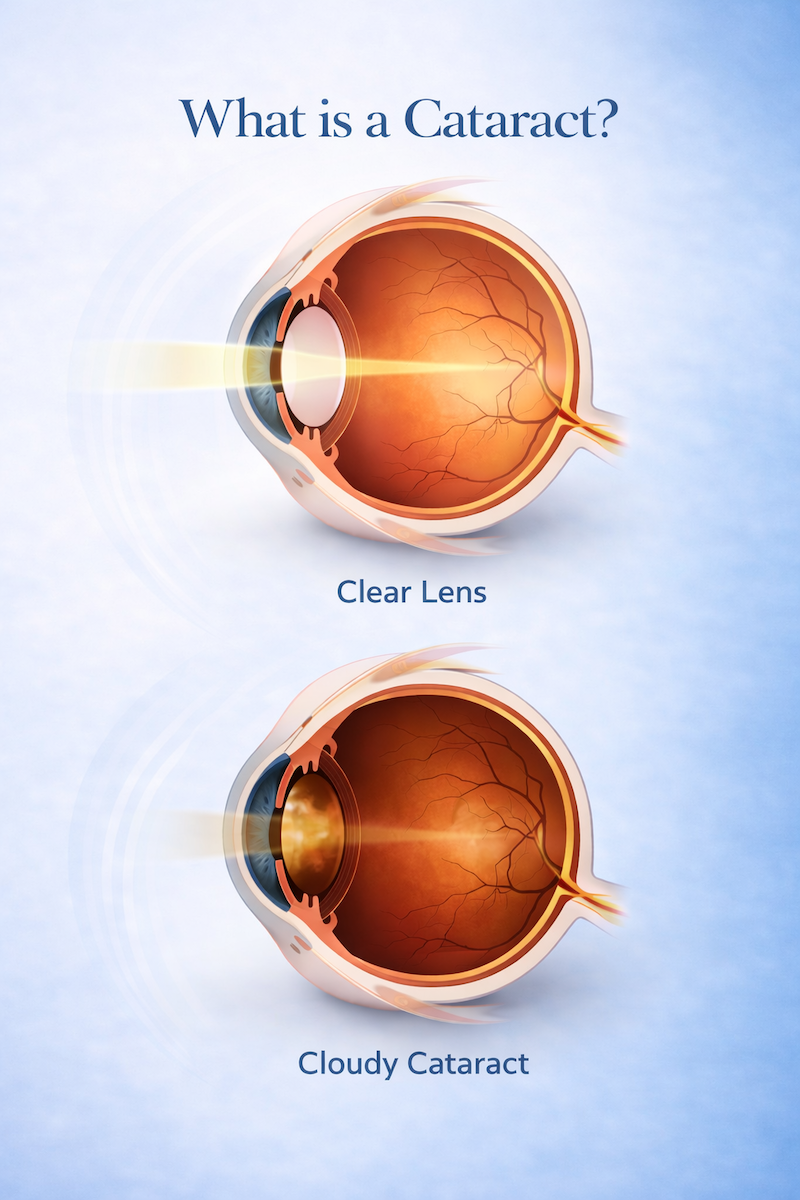
The human eye is analogous to a camera. The lens in an eye is analogous to the lens in the camera. It transmits light and can focus on distance or near objects by changing its shape.
A cataract is a clouding of the eye’s natural lens that causes vision to become blurry, dim, or hazy over time. Cataracts are most commonly related to aging, but may also develop due to injury, UV light exposure, or certain medications.
As cataracts progress, they can begin to interfere with reading, driving, and other daily activities.
Common Symptoms of Cataracts
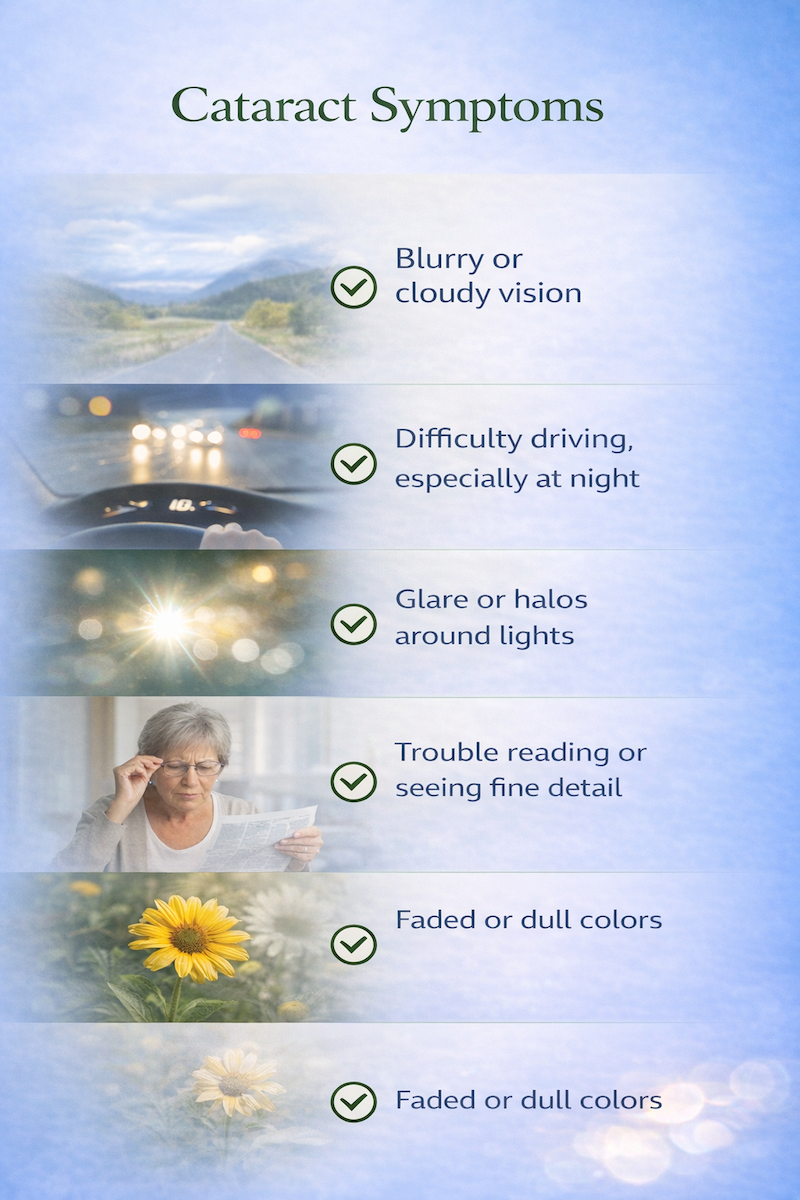
Cataracts often develop gradually. Common symptoms may include:
- Blurry or cloudy vision
- Difficulty driving, especially at night
- Glare or halos around lights
- Trouble reading or seeing fine detail
- Reduced contrast sensitivity
- Faded or dull colors
If these symptoms are beginning to affect your daily life, it may be time to consider cataract surgery.
When Should Cataract Surgery Be Considered?
Cataract surgery is usually recommended when vision begins to interfere with everyday activities such as driving, reading, or enjoying hobbies.
The decision is based not only on the cataract itself, but on how much it affects your quality of life and visual goals.
For example, if glare from headlights makes evening driving uncomfortable, or if reading has become more difficult even with glasses, surgery may be appropriate.

Your Cataract Evaluation
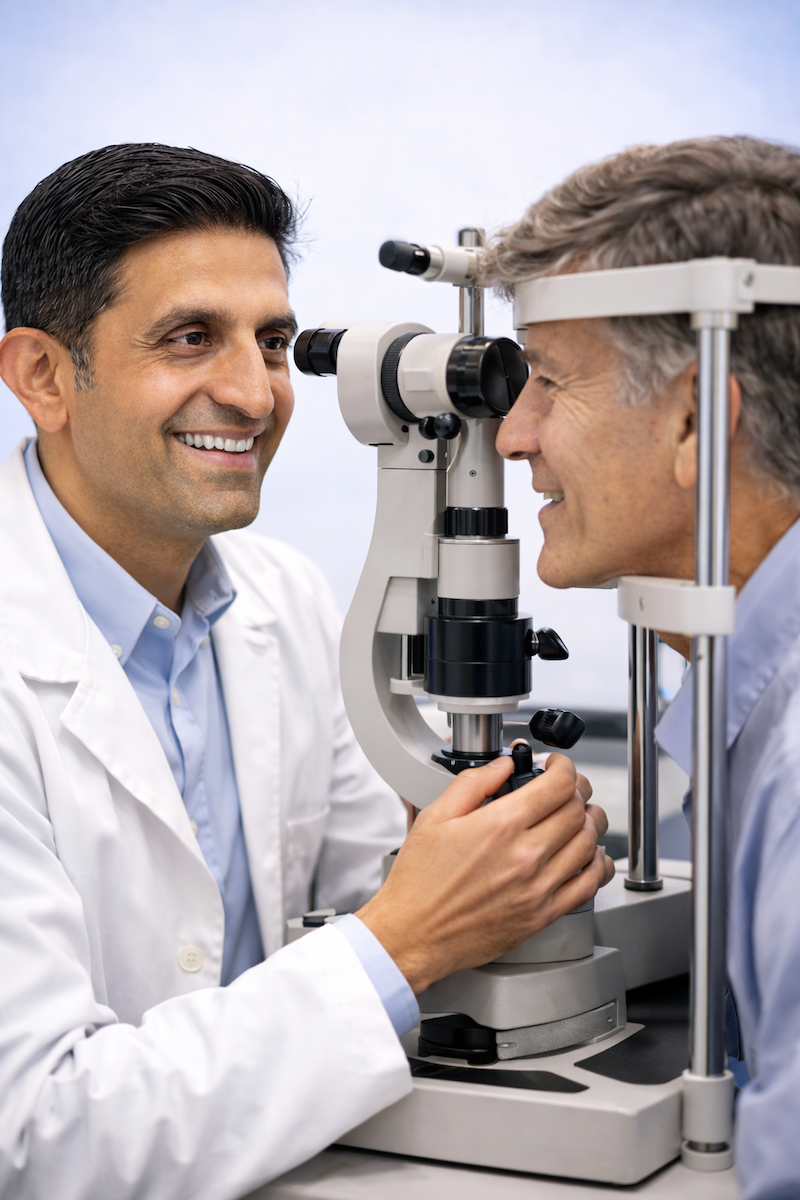
A cataract evaluation includes a comprehensive eye examination and detailed measurements to determine the best surgical plan for your eyes.
During your visit, we assess the cataract, review your symptoms, discuss your visual goals, and help determine the most appropriate lens options for your lifestyle.
These measurements are important because they help guide both the timing of surgery and the selection of the intraocular lens implant.
Intraocular Lens (IOL) Options
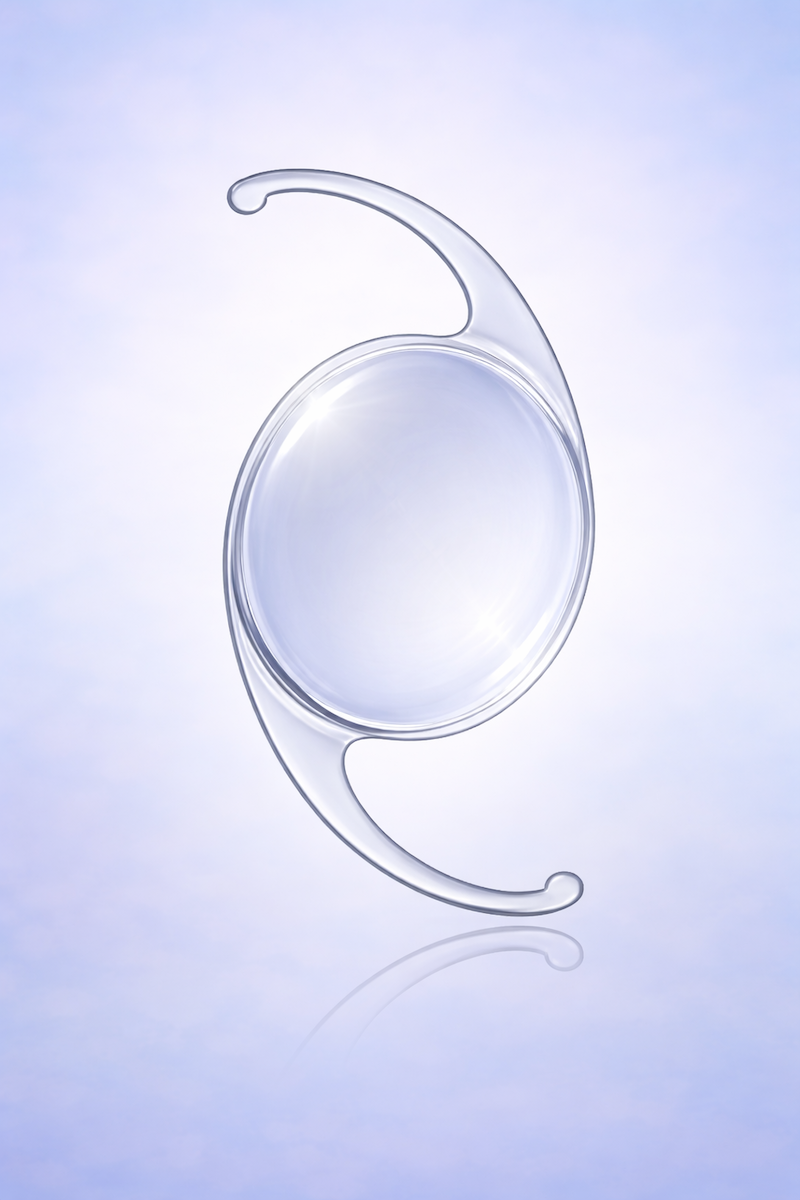
When the natural cataract lens is removed, it is replaced with a clear artificial intraocular lens implant. We offer several lens options tailored to each patient’s eyes, lifestyle, and visual priorities.
Monofocal Lens
Designed to provide clear vision at only a single focal point in patients without astigmatism. Glasses WILL still be needed for activities such as intermediate (computer), near (reading books), or for people with astigmatism.
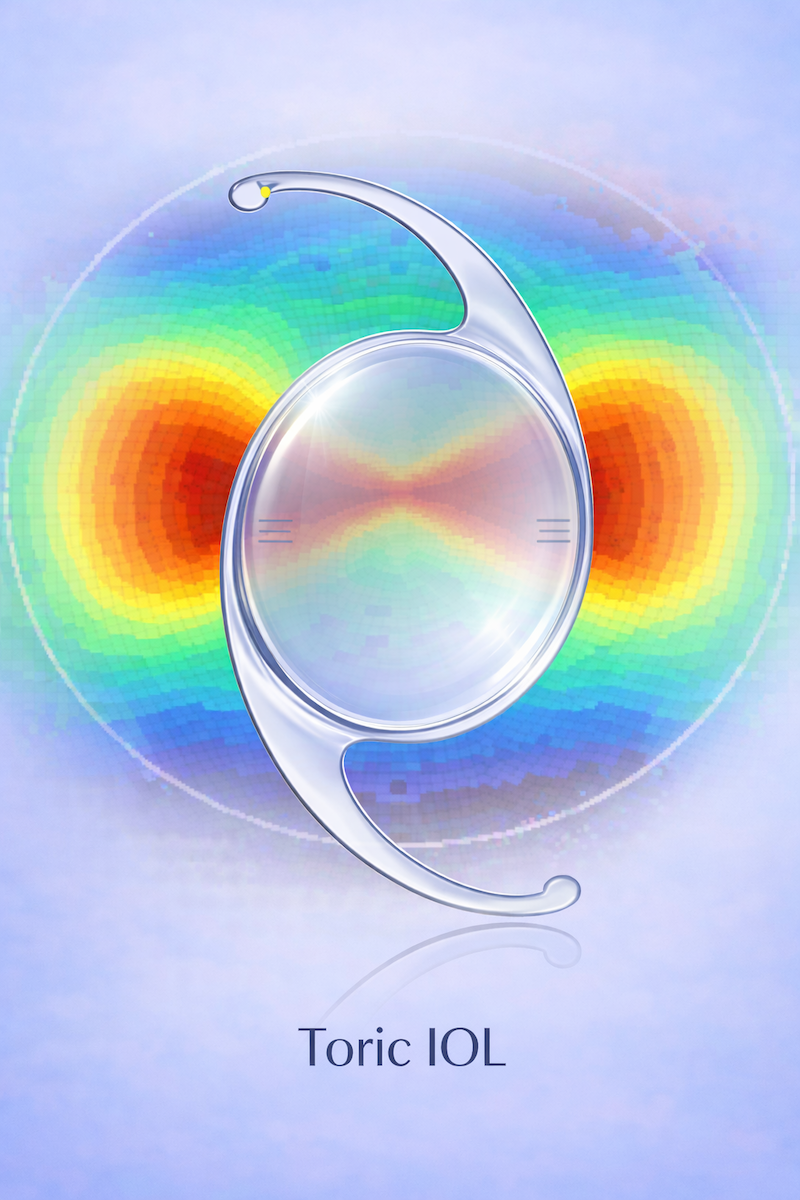
Toric Lens
A great option for patients with corneal astigmatism and will reduce dependence on glasses for distance vision.
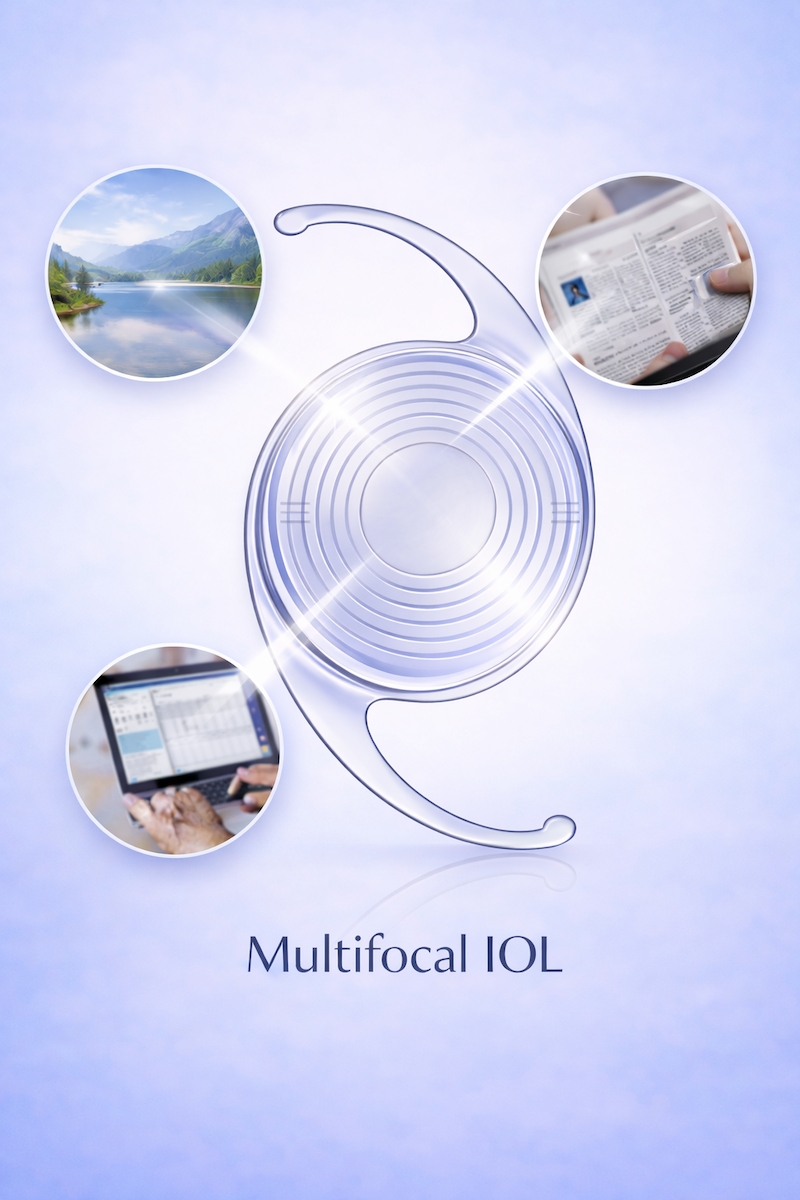
Multifocal / Advanced Technology Lens
Designed to improve distance, intermediate, and near vision for a reduced dependence on glasses.
The best lens for you depends on your visual preferences, eye health, and daily activities. We will guide you through these choices so you can make an informed decision.
Standard Monofocal Lens
A standard monofocal lens is designed to provide clear vision at a single focal point, most commonly distance. This is the most traditional lens option used in cataract surgery.
Patients who choose a monofocal lens often still need glasses for certain activities such as reading, computer work, or correction of residual astigmatism.
For many patients, monofocal lenses are an excellent option because they provide reliable, high-quality distance vision and a straightforward visual experience after surgery.
Toric Lens
A toric lens is designed for patients who have significant corneal astigmatism. Astigmatism occurs when the curvature of the cornea causes light rays to focus unevenly, resulting in blurred or distorted vision.
By correcting astigmatism at the time of cataract surgery, a toric lens can often improve distance vision and reduce dependence on glasses.
During your pre-operative evaluation, we measure the amount and orientation of your astigmatism carefully to determine whether a toric lens is an appropriate option for your eyes.
Multifocal / Advanced Technology Lens
Multifocal and other advanced technology lenses are designed to improve vision at more than one distance and may reduce dependence on glasses for many daily activities.
For appropriately selected patients, these lenses can help provide greater freedom from glasses for both distance and near tasks. Some patients may still need glasses occasionally, especially in low-light settings or for very fine print.
Because not every eye is an ideal candidate for this type of lens, we perform detailed testing and discuss your lifestyle, visual priorities, and overall eye health before recommending this option.
What to Expect During Cataract Surgery
Cataract surgery is an outpatient procedure performed through a very small incision. The cloudy lens is gently removed and replaced with a clear intraocular lens implant.
Most patients receive mild sedation and numbing of the eye rather than general anesthesia, allowing for a safe and comfortable experience.
In many cases, there is no patching required and no stitches are needed.
Recovery After Cataract Surgery
Recovery varies from patient to patient, but many people notice improved vision within the first several days. Full healing typically occurs over the following weeks.
Eye drops are used after surgery to reduce inflammation and lower the risk of infection. These drops are usually used more frequently at first and then tapered over time.
- Outpatient procedure
- No driving home the day of surgery
- Minimal downtime for most patients
- Post-operative drops required
- Follow-up visits scheduled
Why Choose Premier Vision Associates for Cataract Surgery?
Choosing where to have cataract surgery is an important decision. Our goal is to provide a personalized, high-quality experience focused on both visual outcomes and patient comfort.
Experienced Surgical Care
Advanced cataract surgery using modern techniques with a focus on precision, safety, and excellent visual outcomes.
Personalized Lens Selection
We take the time to understand your visual goals and lifestyle to help select the most appropriate lens for your needs.
Advanced Technology
Modern diagnostic testing and surgical techniques, including laser-assisted cataract surgery when appropriate.
Patient-Centered Care
We guide you through every step—from evaluation to recovery—with clear communication and personalized care.
Comfortable Experience
Outpatient surgery with mild sedation ensures a safe and comfortable experience.
Continuity of Care
We provide ongoing care before and after surgery to support long-term eye health.
Schedule Your Cataract Consultation
If cataracts are affecting your vision or daily activities, we invite you to schedule a consultation. Our team will guide you through the evaluation, discuss your lens options, and help you determine the best plan for restoring clear vision.